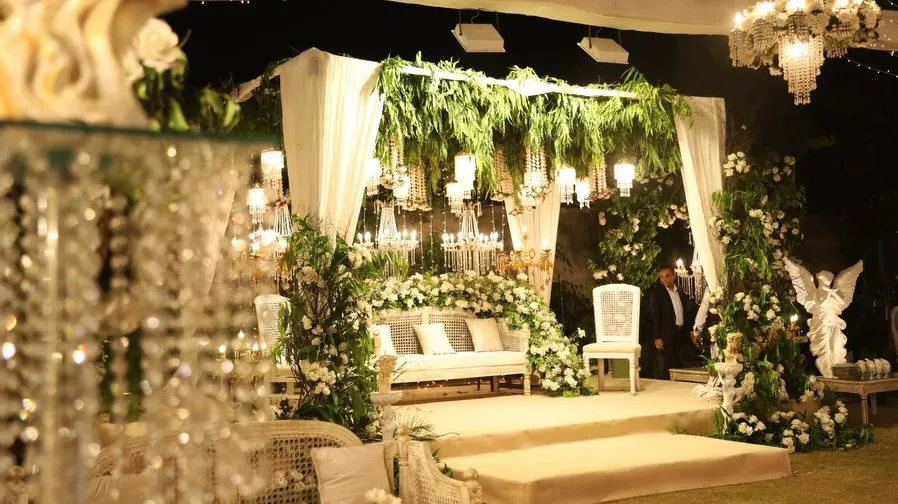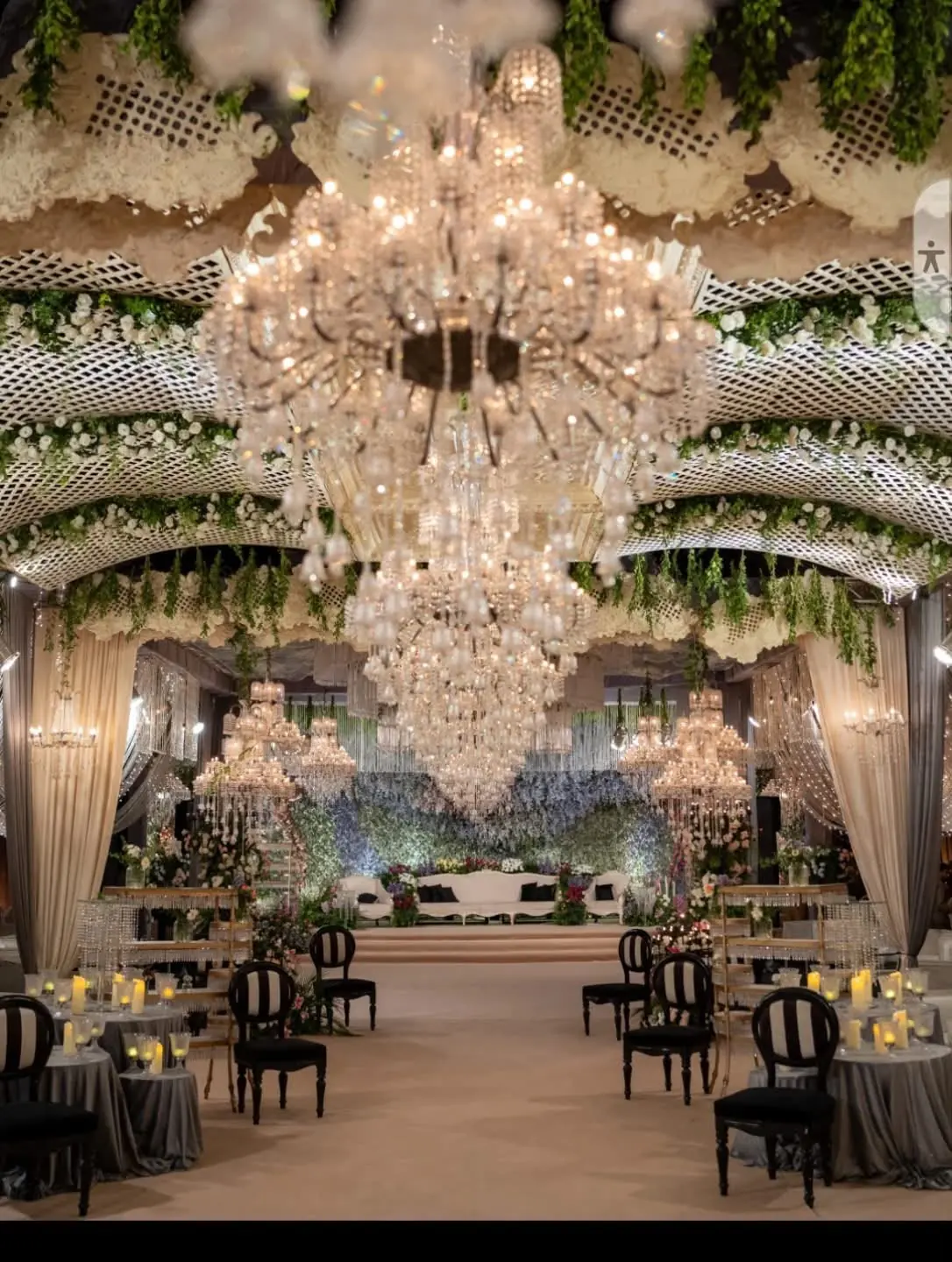

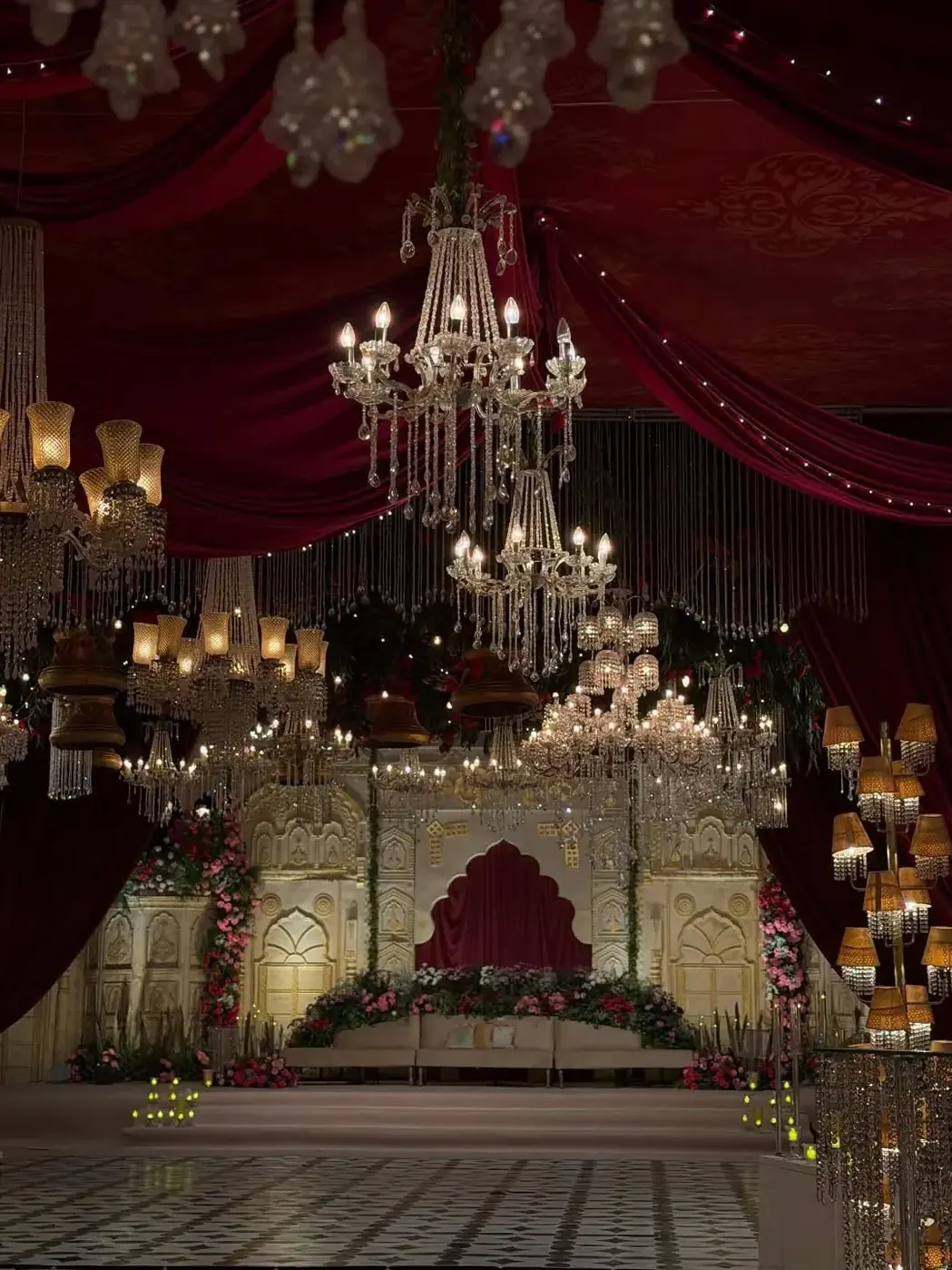
Great barat stage decoration does two jobs at once: it frames the bride and groom like royalty, and it works hard for the cameras all night. The baraat is the most formal, most photographed event of a Pakistani wedding, so the stage, aisle and lighting need to feel grand without swallowing the couple. Here are the barat stage ideas we rely on, from red velvet and crystal chandeliers to Mughal arches, rose aisles and a rukhsati moment that leaves everyone teary in the best way.
1. Red velvet and crystal chandeliers
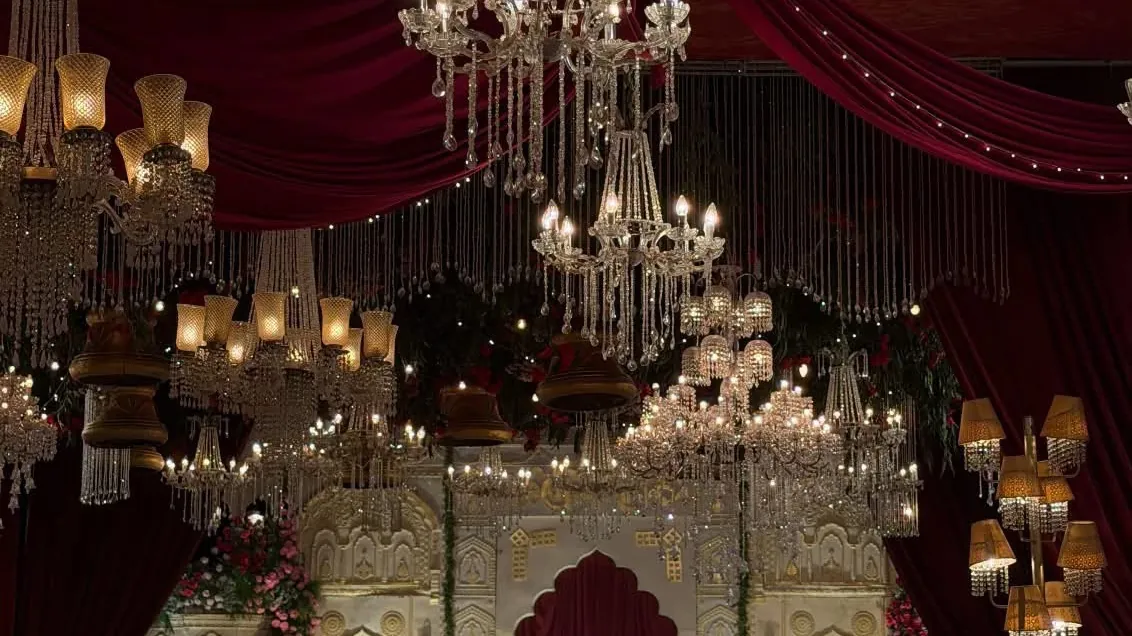
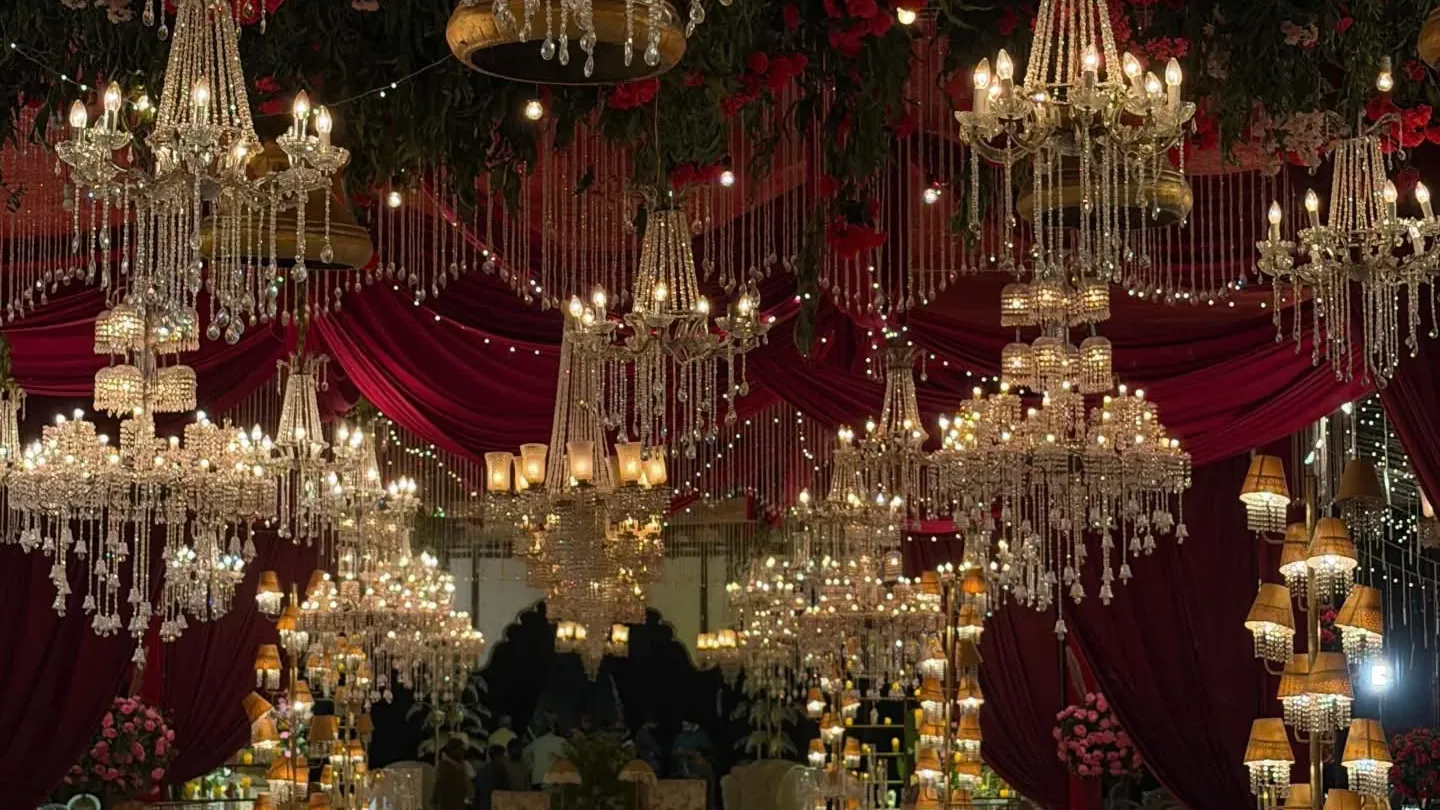
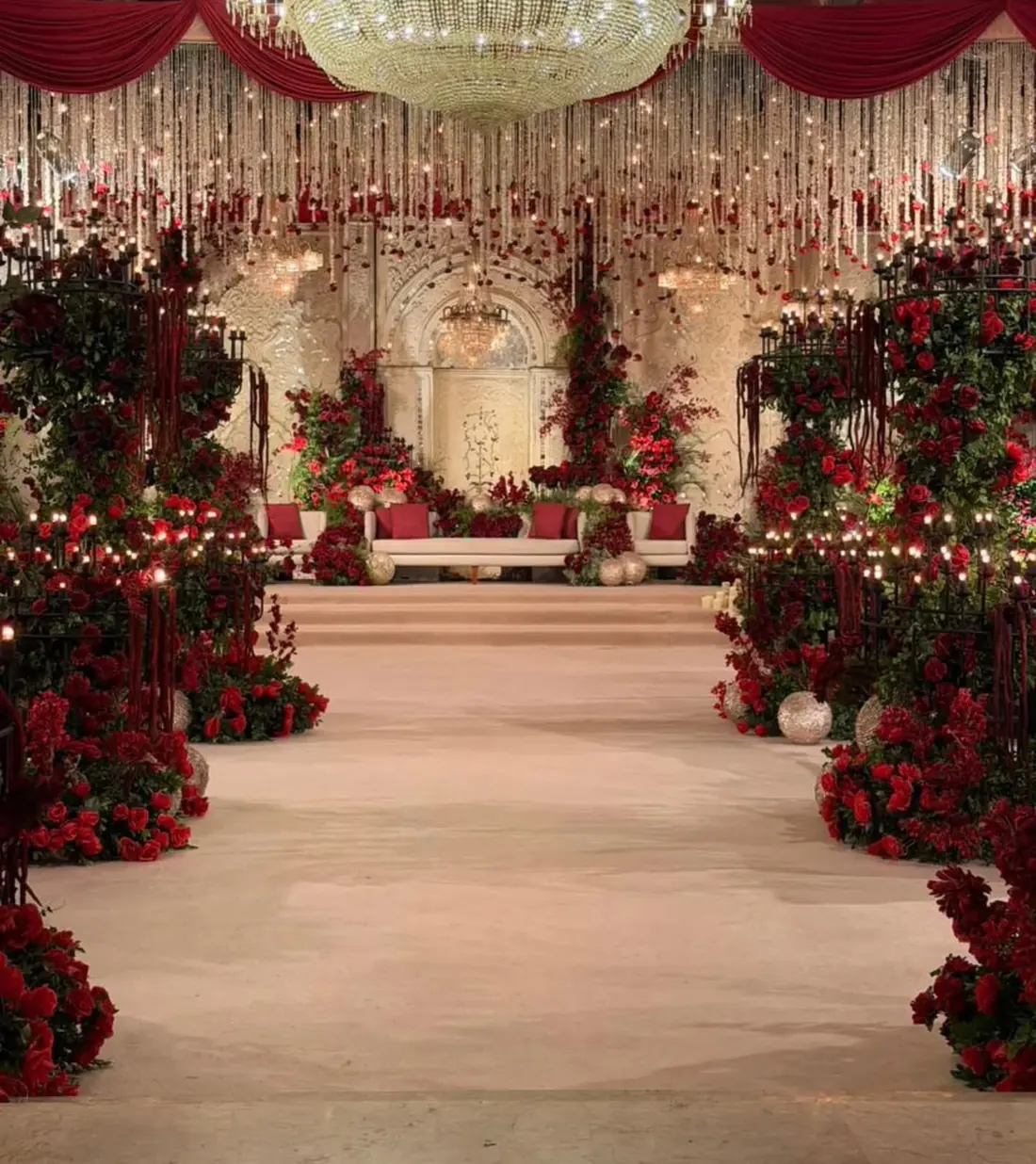
Red is the colour of the baraat for a reason: it is bold, celebratory and flatters the bridal lehenga. One of the setups the Events by OT team created recently was a red velvet marquee packed with crystal chandeliers and lampshade stands. The velvet absorbs light, so the chandeliers sparkle harder and the whole space feels rich and enveloping.
To keep it from feeling heavy, balance the red with ivory florals on the stage and plenty of warm light.
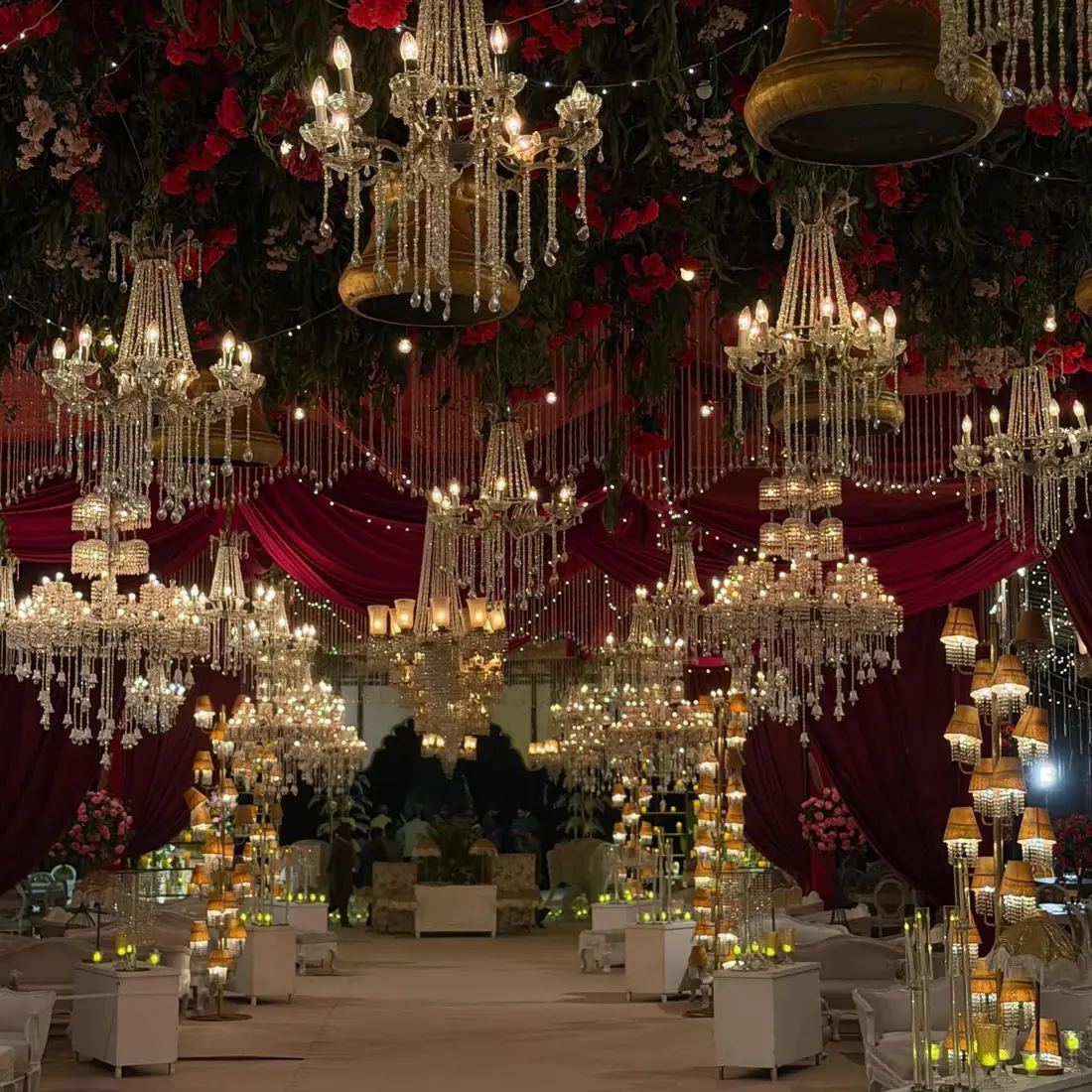
2. A red rose aisle to a cream floral stage
The walk to the stage is half the drama. A red rose aisle lined with tall candle stands, leading to a cream floral stage, gives the bride a cinematic entrance and gives photographers a perfect leading line. The contrast between deep red petals and a soft cream backdrop also keeps the couple as the clear focal point.
3. Mughal arches and jharokhas
Mughal architecture suits the baraat perfectly. Carved arches, jharokha windows and scalloped frames behind the sofa create depth and a sense of heritage. For a showstopper, a hand-painted Mughal dome with a floral chandelier above the stage turns the ceiling into part of the design, something our team has built and guests always look up at.
Layer arches at different depths so the stage looks dimensional in photos rather than flat.
4. Stage seating and layout
The couple's sofa should be comfortable, wide enough for the lehenga and set slightly forward so florals frame rather than crowd the pair. Leave room at the sides for family photos, and add a few low steps with a runner so elders can come up for salaami and duas easily.
A good stage is also deep enough for group photos without guests standing on the flowers.
- Wide sofa with low back so the backdrop stays visible
- Side space for family groups of eight to ten
- Shallow, well-lit steps with a runner
- Hidden power and cable routes for lights and fans
5. Lighting cues that build the moment
Lighting should follow the story of the night. Dim the hall slightly and spotlight the aisle for the bride's entry, bring the stage up to full warmth once the couple is seated, and soften everything again for the rukhsati. Warm-white pin spots on the florals and chandeliers make the stage glow, while coloured wash lights are best used sparingly.
Brief your photographer and lighting team together so the cues match their shot list.
6. Entrance and baraat arrival
The baraat's arrival deserves its own decor. A floral entrance gate, a rose petal welcome and a dhol team at the door set the energy before anyone reaches the stage. Plan where the groom's family gathers, where the doodh pilai and joota chupai rasms happen, and make sure that space is lit and photogenic too.
7. A rukhsati moment worth remembering
Rukhsati is the emotional heart of the baraat. Create a clear path from the stage to the car, lined with candles or florals, and keep it free of clutter so family can walk with the bride. A Quran held overhead, a soft phoolon ki chadar and gentle music turn a hurried exit into a moment people remember.
Decorate the rukhsati car to match the stage florals so the photos feel like one story.
8. Hall vs marquee: what changes
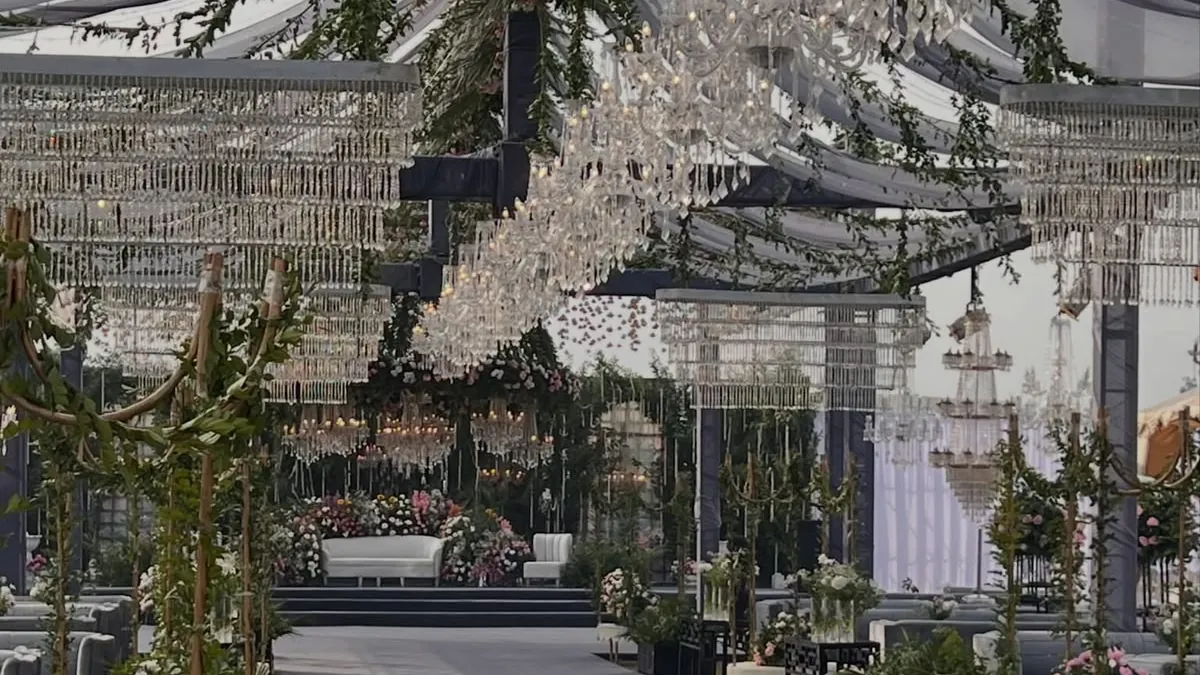
In a banquet hall you often work with fixed ceilings, existing lights and strict timings, so focus the budget on the stage, aisle and entrance where it shows most. A marquee is a blank canvas: you control the ceiling, drapes, chandeliers and layout, which allows fully immersive themes like a red velvet interior or a painted dome.
Either way, visit the venue early, measure the stage area and check ceiling height before choosing chandeliers.
9. Designing a photo-friendly stage
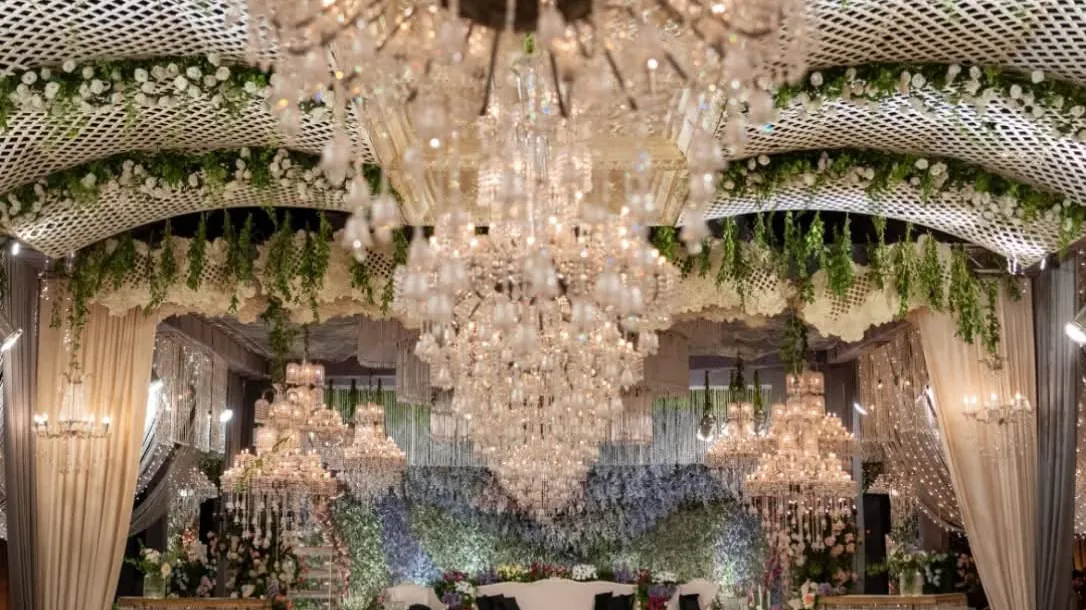
A photo-friendly stage has a clean backdrop behind the couple's heads, no bright lights pointed at the lens, and florals that frame rather than block faces. Keep busy patterns to the edges and let texture, depth and light do the work. Ask yourself how the stage will look in a tight portrait and a wide shot, then design for both.
Plan the baraat as part of the whole wedding
The baraat looks strongest when it connects to the events around it. Many families carry one colour story from the nikkah decor through the baraat and into a softer walima decor. Explore our barat decor in Lahore or see full weddings in our gallery. Events by OT can manage everything from the first idea to the last guest.
Plan it with Events by OT
Ready to design a baraat that feels grand from the gate to the rukhsati? Message Events by OT on WhatsApp at 0322-4414442 for a free consultation. Share your date, venue and inspiration, and our team will help you plan a stage your family will be proud of.